Specifications
Rigol DS1054Z specifications explained
Specifications only matter when they map to real jobs. Here is what the Rigol DS1054Z's main figures mean for a buyer.
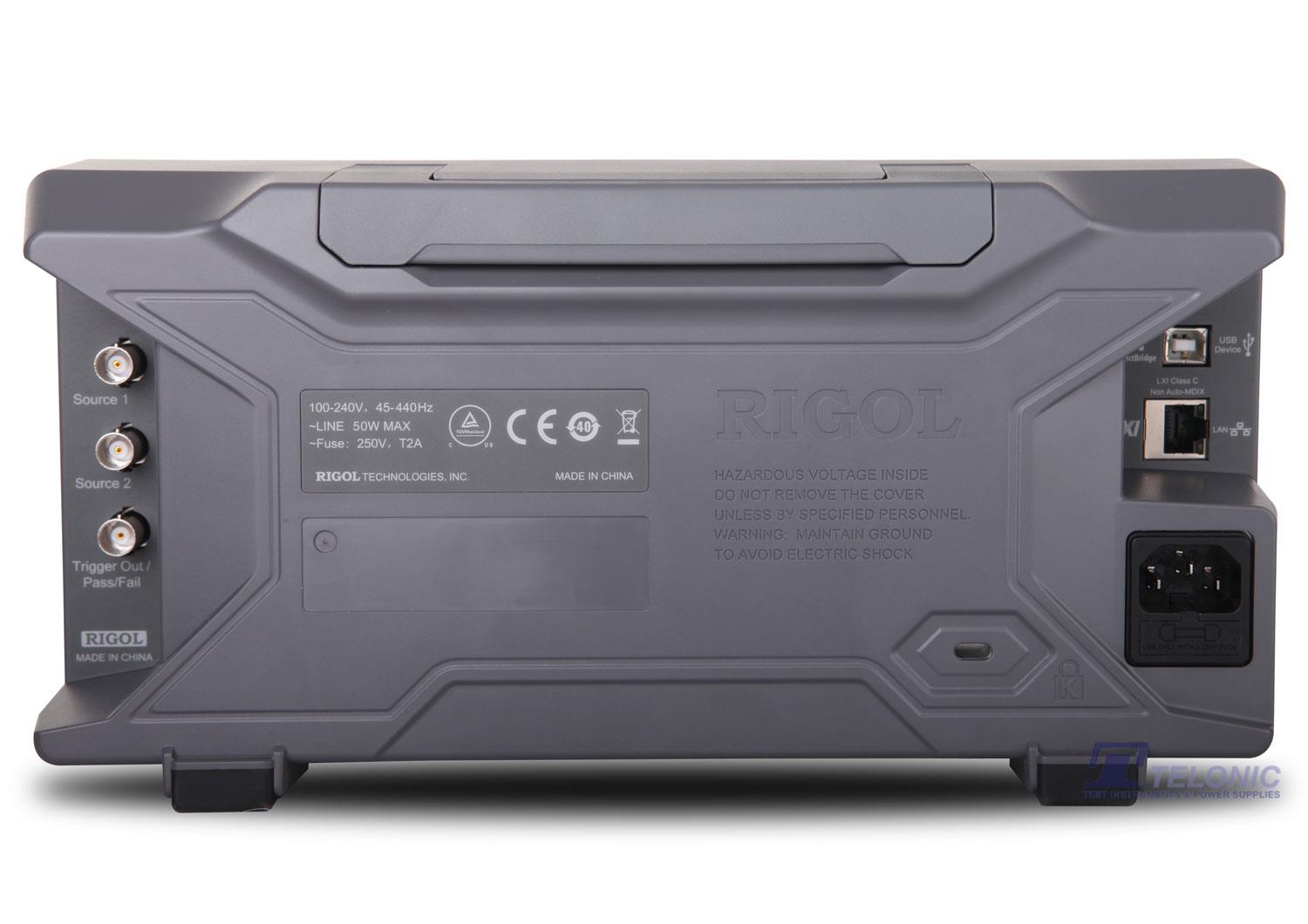
| Bandwidth | 50 MHz. Suitable for many education, hobby, repair and general embedded tasks, but not a substitute for a higher-bandwidth scope when rise-time margin is essential. |
|---|---|
| Analogue channels | Four. This is one of the DS1054Z's most important advantages for debugging multiple signals at once. |
| Maximum sample rate | Up to 1 GSa/s. Available sample rate depends on channel use and timebase settings. |
| Memory depth | Up to 24 Mpts. Deeper memory helps capture longer events while retaining detail for zooming. |
| Display | 7-inch WVGA colour display, practical for bench use and waveform comparison. |
| Capture rate | Up to 30,000 waveforms per second in Rigol's DS1000Z series specification. |
Which specification matters most?
For many DS1054Z buyers, the four-channel input count is the deciding factor. Bandwidth attracts attention, but debugging work often becomes easier simply because you can see more related signals at the same time.
When to choose something else
If your regular work is above the DS1054Z's measurement comfort zone, a higher-bandwidth oscilloscope may be the better long-term purchase. Start with the signal bandwidth and rise-time you need, then decide whether the DS1054Z is still the right fit.
Specification-led tasks
The four-channel input count is useful for embedded timing debug, while the memory and triggering tools help when testing bench power-supply behaviour.